If you’ve heard of Pelican — the company that makes those nearly indestructible hard cases you see on film sets, in military vehicles, and in airline overhead bins — you might have noticed something confusing when you go to buy one: Pelican doesn’t just make one kind of case. They make at least three distinct product families at very different price points, and the naming alone (Vault, Core, Protector, Air) doesn’t tell you much about what you’re actually getting. A hard case is a rigid, closable container designed to protect cameras, lenses, audio gear, or anything else fragile from impact, moisture, and dust — often built to survive being checked on an airplane. The question this article answers is simple: if you’re a working professional or a serious enthusiast who depends on your gear, does paying more for a higher-tier Pelican product actually buy you something meaningful — or is the budget Vault line genuinely good enough? We pulled together published specs, manufacturer documentation, and aggregated owner reports to give you a straight answer.
What You’re Actually Comparing: The Pelican Product Tiers Explained
Before you can decide whether the price gap is worth it, you need to understand what the tiers actually are. Pelican structures its lineup roughly like this, according to Pelican Products, Inc. Vault Series Product Documentation and Spec Sheets, 2024, and the company’s Air Series and Protector Series Technical Specifications, 2024.
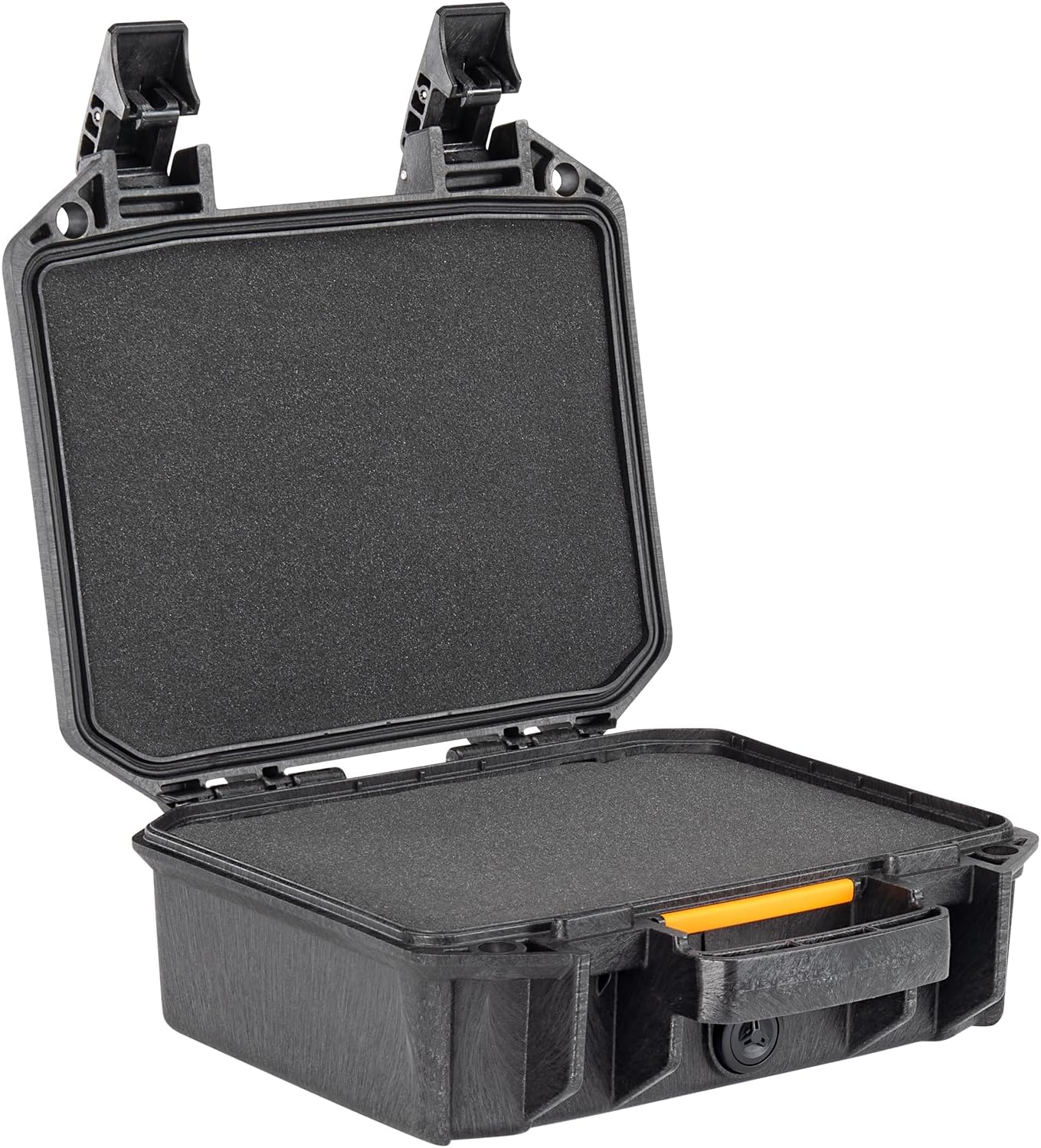
Pelican Vault Series is the entry-level line, manufactured in China, positioned at approximately $30–$130 depending on size. Vault cases use a polypropylene shell, a single-throw latch system, and a pressure-equalization valve. They carry an IP67 rating — meaning dust-tight and waterproof to submersion at one meter for thirty minutes — and come with a lifetime guarantee. The foam inside is pre-cut pick-and-pluck foam, a grid you pull pieces from to customize the shape around your gear.
Pelican Core Series is the mid-tier line, introduced as a value step between Vault and the flagship Protector. Core cases are made in the USA, use a dual-throw latch system (two latches per side instead of one), and include a more refined foam package. Pricing typically runs $80–$200.
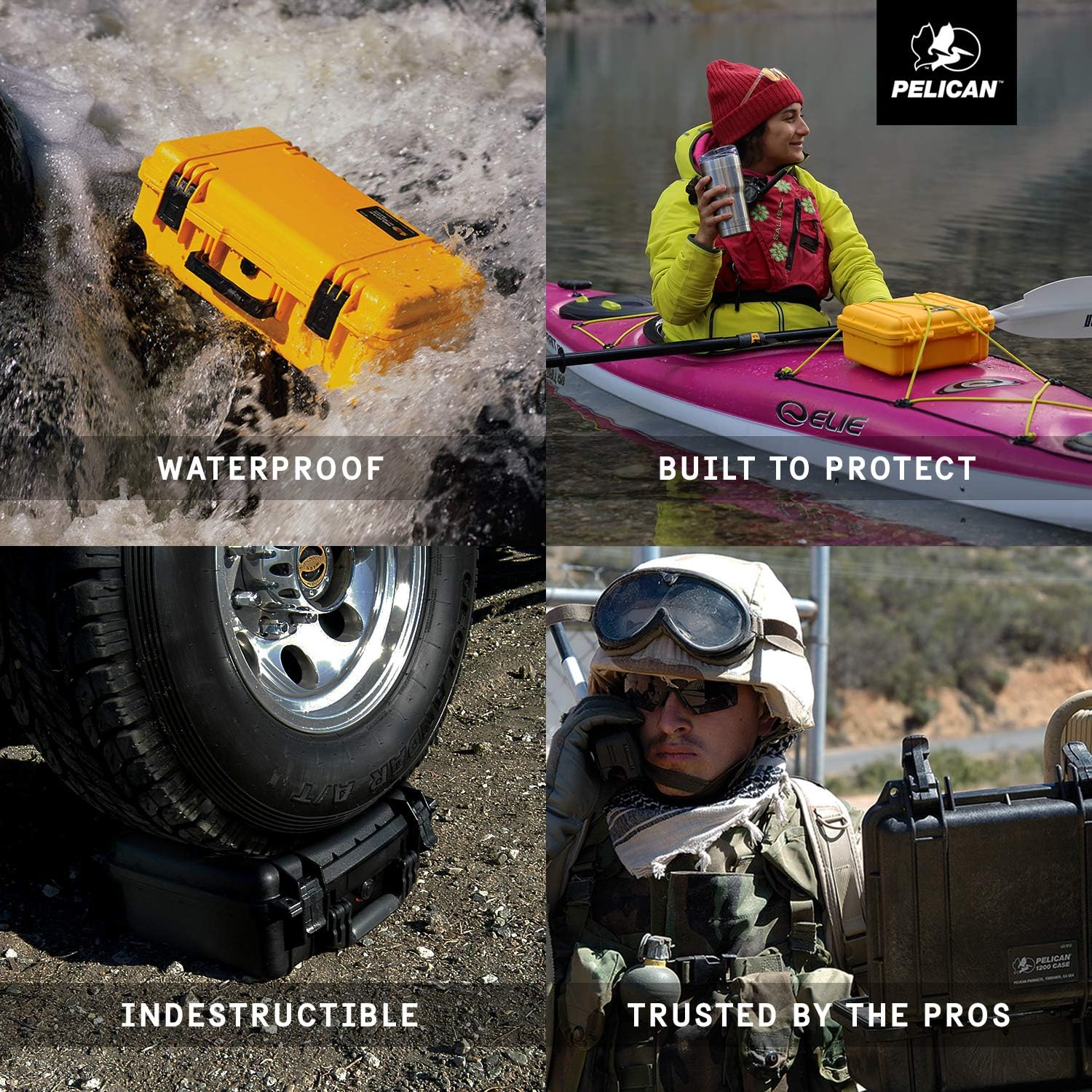
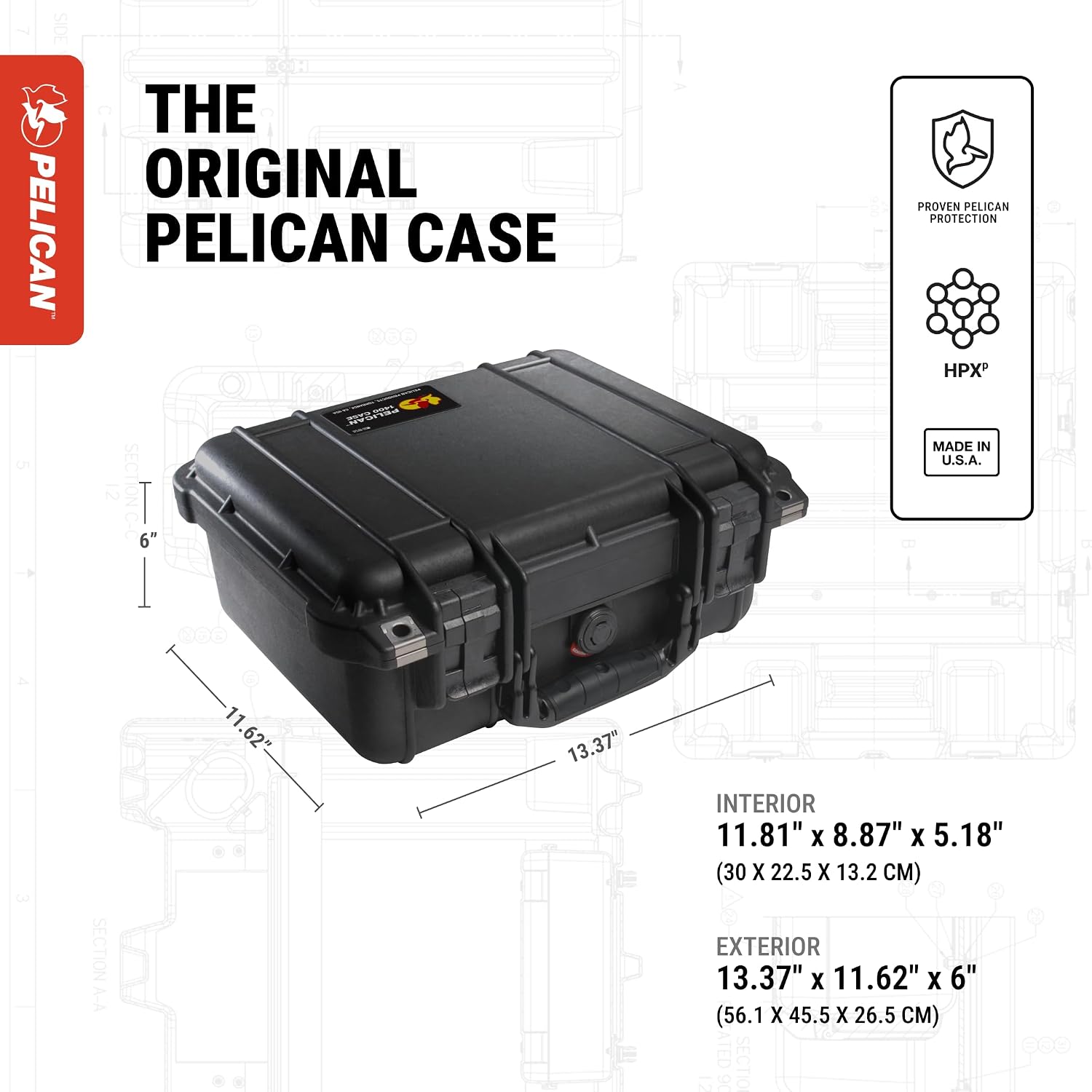
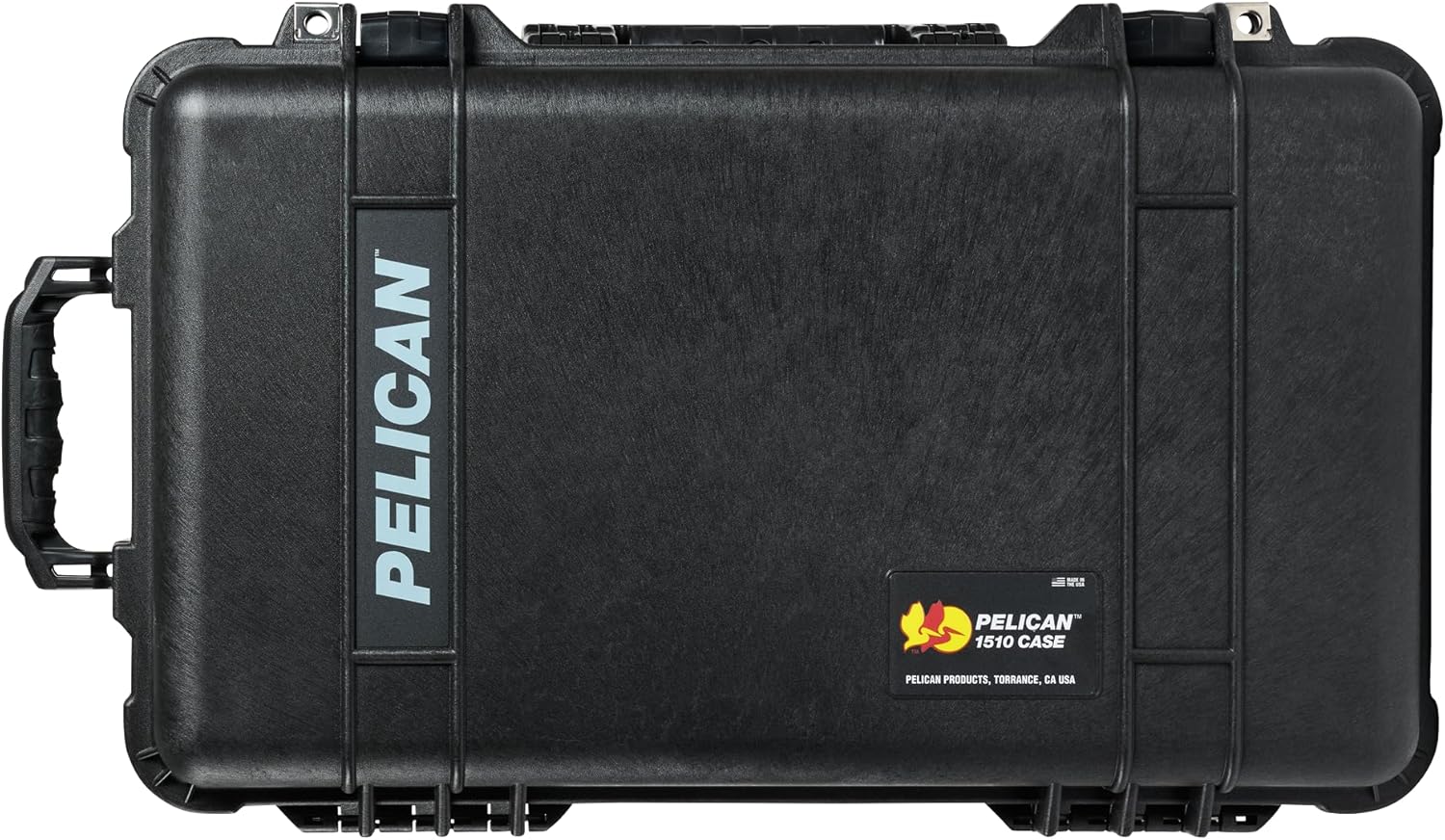
Pelican Protector Series — the “original” Pelican — is the flagship line, made in the USA, built from a copolymer resin with an extensive track record in field use, featuring stainless steel hardware on higher-end models, a more aggressive gasket seal, and a warranty backed by decades of owner data. The 1510 carry-on, the 1650, and the 1510 LOC are all Protector cases.
Pelican Air Series is the premium lightweight tier, sharing the same IP67 rating and USA manufacture as the Protector but using a significantly lighter HPX2 polymer shell — relevant when airline weight limits are a real operational cost.
Per Pelican Products, Inc.’s own product documentation, Vault is positioned as “value protection,” Core as “enhanced everyday protection,” and Protector as the company’s “standard of professional protection.” Those are marketing words, but the underlying spec differences are real and measurable.
How Each Tier Performs in Real-World Professional Use
The Pelican Vault: Genuine Budget Protection With One Consistent Weak Point
The IP67 rating on Vault cases is not watered down. Both Vault and Protector carry the same IP67 certification — a third-party standard meaning the case has passed dust-tight and waterproof testing to a defined international spec. As B&H Photo Video Explora’s Hard Case Buyer’s Guide: Matching Protection to Your Gear and Budget (2024) confirms, the Vault series shares this certification with higher-tier Pelican lines. For a drone operator or photographer working in rain or dusty environments, IP67 is IP67 regardless of which product tier it appears on.
Where the Vault consistently draws criticism in owner reports is the single-throw latch system. DPReview’s aggregated owner reports on Vault and Protector series travel use (2023–2024) show a recurring pattern: Vault owners who check cases on commercial airlines report the single-throw latches occasionally popping open under baggage handling stress — not catastrophically, but enough that multiple users add TSA-accepted padlocks or zip ties as a backup measure. This is the Vault’s most documented real-world failure mode, and it matters specifically in the airline-checked-baggage context.
The pick-and-pluck foam in Vault cases is functional, but Outdoor Photographer’s Hard Cases for Field Photographers: A Practical Overview (2023) notes that foam density in entry-level Pelican lines tends to be slightly less firm than the foam packaged with Protector cases. For precision optics — long telephoto lenses, cinema primes, or anything with exposed front elements — the denser foam environment in a Protector or Air case provides more controlled support.
Pelican
$64.95
In stock on Amazon
Check price on AmazonThe Pelican Core: The Dual-Latch Middle Ground That Closes the Most Important Gap
The Core series earns its position by addressing the Vault’s primary failure mode directly. Dual-throw latches — the same latch configuration used on Protector cases — mean airline baggage handling applies pressure against two latch points per side rather than one, dramatically reducing the pop-open risk that Vault owners report. The Core also brings USA manufacturing into the equation, which matters for buyers whose procurement specifications or client contracts require domestic manufacturing.
The Core’s foam package is improved over Vault, with a firmer density more comparable to the Protector line, which makes it a reasonable choice for mid-value precision gear. For gear valued in the $1,500–$4,000 range that will see regular airline travel, the Core often represents the most rational price-to-protection position — you close the critical latch vulnerability without paying for the full Protector premium.
Sound on Sound’s Gigging Gear Protection: Rack Cases and Hard Cases for Live Audio (2024) flags a practical point relevant to anyone running multiple cases: the Core’s geometry and stacking profile is more consistent with Protector cases than with Vault cases, which matters for touring engineers and production companies who need cases to stack reliably in cargo vans and freight vehicles. Inconsistent stacking geometry shifts load in transit and creates its own category of risk.
Pelican
$124.95
In stock on Amazon
Check price on AmazonThe Pelican Protector and Air: When the Track Record and Hardware Actually Matter
The Protector line’s advantages over Core are narrower in some areas and decisive in others. Stainless steel hardware on higher-end Protector models is genuinely more durable than the hardware on Core cases — relevant for fleet cases that get opened and closed hundreds of times per year. The gasket seal on Protector cases has been validated across a longer field history, and the copolymer resin shell has a documented performance record in extreme environments that the Core, as a newer product line, simply doesn’t have yet.
For rental houses, broadcast production companies, and working professionals transporting gear valued above $5,000 in a single case, the Protector is the appropriate baseline — not because the Vault or Core are poorly made, but because the latch reliability, foam density, hardware durability, and long-run warranty track record all favor the higher-tier case when the downside of a single failure is significant.
The Air series adds one more variable: weight. The HPX2 polymer shell is meaningfully lighter than the standard Protector copolymer. As B&H Photo Video Explora’s Hard Case Buyer’s Guide notes, for professionals running multiple checked cases on frequent commercial flights, the weight savings translate directly into avoided overweight baggage fees or the ability to carry more gear within airline weight limits. At a street price roughly $100–$150 higher than a comparable Protector, the Air makes financial sense for any shooter whose overweight fees exceed that amount across a season of travel.
Pelican
$269.95
In stock on Amazon
Check price on AmazonThe Numbers: Where the Price Gap Sits in 2025–2026
| Case | Tier | IP Rating | Latches | Made In | Approx. Street Price (2026) |
|---|---|---|---|---|---|
| Pelican Vault V300 | Entry | IP67 | Single-throw | China | ~$50–$65 |
| Pelican Core C55 | Mid | IP67 | Dual-throw | USA | ~$100–$130 |
| Pelican 1510 Protector | Pro | IP67 | Dual-throw + steel | USA | ~$175–$200 |
| Pelican Air 1615 | Premium | IP67 | Dual-throw + steel | USA | ~$280–$320 |
Prices based on aggregated retail data as of May 2026. Street prices fluctuate by retailer.
The gap between a Vault V300 and a Pelican 1510 Protector runs approximately $120–$140 on a carry-on-sized case. The gap between Vault and Air is closer to $250. The question isn’t whether that’s a big number — it’s whether it’s a big number relative to what’s inside the case.
The Rational Insurance Policy: Decision Rules for Working Professionals
Here is how to apply this to whatever purchase decision is pending on your end.
If you are protecting gear valued under $1,500 and primarily transport it by car or carry it yourself: the Vault is a rational choice. The IP67 protection is real, the foam works, and the cost savings are meaningful at that gear value. Add a TSA padlock for any airline travel and the latch vulnerability is largely mitigated.
If you check cases on commercial flights more than a few times per year: move to Core or Protector. The dual-throw latch difference is where owners consistently report the Vault’s failure mode, and airline baggage handling is exactly the environment where that failure matters most. The upgrade cost is modest relative to the risk.
If you are transporting gear worth more than $5,000 in a single case: the Protector or Air line is the appropriate tier. The latch reliability, foam density, and long-run warranty data all favor the higher-tier case when the downside of a single failure is significant. At that gear value, the case cost is rounding error relative to what it protects.
If you are sourcing five or more cases for a fleet: standardize on one tier, and make it at least Core. As Sound on Sound’s Gigging Gear Protection overview and B&H Photo Video Explora’s Hard Case Buyer’s Guide both note, fleet consistency — same case geometry, same stacking profile, same latch standard — reduces logistical friction in ways that per-unit savings on Vault cases cannot offset. Mixing tiers in a fleet creates mismatched stacking, different foam ecosystems, and inconsistent lock compatibility.
If airline weight limits are a real operational cost for you: the Air series deserves serious consideration. For touring AV engineers or broadcast cinematographers running multiple checked cases per trip, the HPX2 shell’s weight savings can translate directly into avoided overweight fees across a season of travel.
The Honest Bottom Line
The Vault is not a lesser Pelican. The IP67 rating is genuine, the lifetime guarantee is real, and for a wide range of use cases — hobbyist kit protection, car transport, studio storage — it delivers strong value. The step up to Core and Protector buys you a more robust latch system, USA manufacturing, denser foam, and a longer track record in the specific failure environment that matters most to working professionals: commercial airline checked baggage handling.
The price gap becomes worth it the moment you start regularly checking cases on aircraft, start transporting gear valued above $3,000–$5,000 in a single case, or start running a fleet where operational consistency matters more than per-unit cost. If none of those conditions apply yet, the Vault is a completely sensible starting point — and straightforward to upgrade when your work outgrows it.