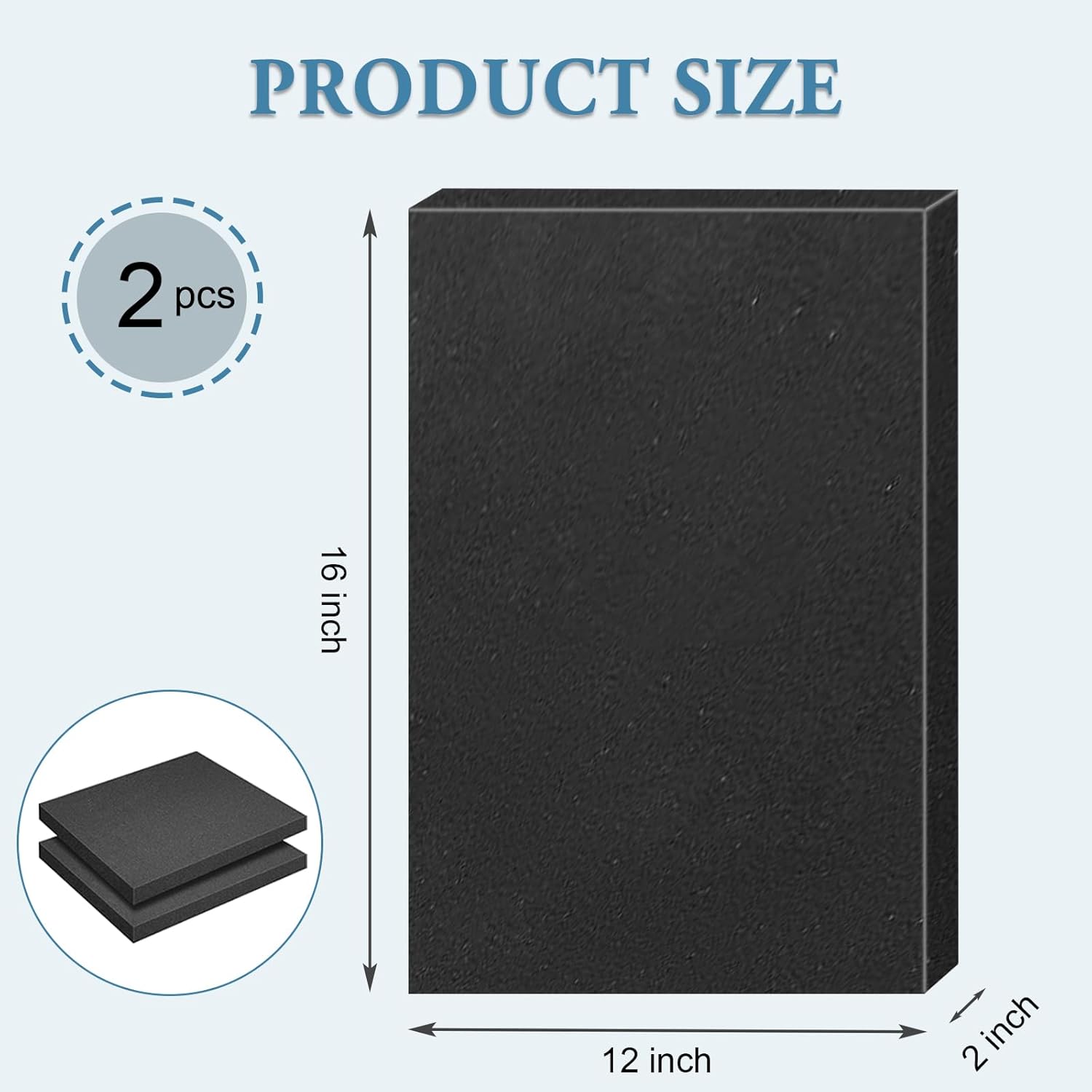
If you’ve ever bought a hard case — a rigid, lockable shell designed to protect expensive equipment during shipping or travel — you’ve probably seen the term pick-and-pluck foam. The name is literal: the foam inside the case arrives pre-scored (cut into a grid of small cubes) so you can pull out individual cubes with your fingers to create a custom-shaped cavity that fits your gear. No cutting tools required, no template, no guesswork. In theory, it’s the perfect system. In practice, there’s enough variation in foam density, cube size, and case-interior geometry across brands like Pelican, Nanuk, and SKB that buying the wrong insert — or misreading what comes stock with a case — can leave your $8,000 camera body rattling around or wedged so tightly you’re fighting to close the lid. This article walks through what the spec sheets don’t surface, so you can make the right call before the gear ships.
After about six to twenty-four months working with professional cases, you’ve learned that “IP67-rated” (meaning dust-tight and waterproof to one meter for thirty minutes, per IEC standards) and “TSA-accepted” are table-stakes features, not differentiators. The real decision-making lives in the foam layer. Let’s get into it.
Why Foam Density Is the Spec That Actually Matters
Foam density is measured in pounds per cubic foot (PCF). The higher the number, the firmer and heavier the foam. Most pick-and-pluck foam used in hard cases falls between 1.3 PCF and 2.2 PCF, and that range covers a wide spectrum of behavior.
Low-density foam (1.3–1.6 PCF): Soft, easy to pluck, conforms readily to irregular shapes. The downside is that it compresses under load — meaning a camera body sitting against thin walls of plucked foam can, over repeated flights, slowly work its way deeper as the foam fatigues. Pelican’s stock pick-and-pluck foam in cases like the 1510 Carry-On has historically landed in this range, which is intentional: it makes field modification easy. But owners consistently report that soft foam is better suited for lighter lenses and accessories than for dense, heavy bodies.
Mid-density foam (1.7–2.0 PCF): The professional sweet spot for most applications. It resists compression over time, holds cavity walls upright without collapsing, and still plucks cleanly without tearing. SKB’s iSeries foam, per SKB’s published documentation, targets this range. Reviewers at DPReview note that SKB’s foam tends to hold its shape better than average stock foam across the iSeries line, particularly in the 3i-2011 and 3i-2213.
High-density foam (2.1 PCF and above): Found primarily in custom-cut or aftermarket inserts. Difficult to pluck by hand — you often need a blade or awl to start the separation. Not practical for field reconfiguration, but excellent for long-term storage or fixed kit configurations.
The spec sheets almost never tell you which density band the stock foam occupies. You’re typically reading cavity dimensions and waterproof ratings, not PCF values. The way to close this gap: check manufacturer technical documentation directly (Pelican, Nanuk, and SKB all publish foam replacement part numbers, which often include density callouts in their associated data sheets), and cross-reference with community reports from working users.
Case-by-Case Compatibility: What Pelican, Nanuk, and SKB Actually Ship
Pelican
Pelican’s approach to pick-and-pluck has been consistent for over a decade: soft foam, fine-cube scoring (roughly 1-inch cubes in most models), and generous interior dimensions. The 1510 Carry-On ships with a three-layer foam system — lid foam, pick-and-pluck base, and a bottom pad — that works well for camera bodies, lenses, and accessories. The Pelican Air 1615 offers a larger interior volume with the same system.
What the spec sheets don’t highlight: the cube scoring on Pelican foam is not uniform across all models. The 1650 uses slightly larger cube segments than the 1510, which affects how cleanly you can carve tight cavities for small accessories like batteries and wireless transmitters. Outdoor Photographer’s case buyer’s guide notes that for precision fits around smaller components, Pelican’s stock foam often benefits from a supplemental layer of convoluted (egg-crate) foam on top to prevent lateral movement.
Pelican also sells replacement and upgrade foam as accessories, including higher-density TrekPak divider systems — a channel-and-divider approach that’s technically separate from pick-and-pluck but relevant if you’re reconsidering the foam layer entirely.
Nanuk
Nanuk cases — particularly the 935 — ship with their own pick-and-pluck foam, but Nanuk’s interior dimensions run slightly narrower per-unit-volume than Pelican’s equivalent sizes. This matters when you’re using published interior specs to pre-plan a layout. B&H Photo Explora’s camera case overview flags this as a common fit issue: users planning a layout based on Pelican interior dimensions and then switching to a Nanuk equivalent without re-measuring sometimes find 5–10mm of difference that disrupts a tight configuration.
Nanuk foam is generally regarded by operators as slightly firmer than Pelican stock foam — closer to the mid-density range — which contributes to better long-term cavity retention. The tradeoff is that plucking is slightly more effortful, especially in the lower layers of a multi-layer setup.
Nanuk does not currently manufacture as wide a range of foam replacement SKUs as Pelican, so if you need to replace a damaged layer, aftermarket sourcing becomes more relevant faster.
SKB
SKB’s iSeries line and R Series rackmounts approach foam differently by use case. The iSeries uses a two-layer pick-and-pluck system with foam that, per SKB’s published spec sheets, is manufactured to consistent density standards across the product line. Sound On Sound’s rack case roundup calls out SKB’s R Series as the benchmark for touring audio rig protection, noting that the foam-lined interiors hold rack-mount gear securely through repeated load-in/load-out cycles without the compression fatigue that affects softer foam over time.
The iSeries foam cube size runs approximately 1 inch square, similar to Pelican, but the bottom layer is notably thicker (often ¾” versus ½” on Pelican equivalents), which provides better vibration isolation for the base of heavy equipment. For drone operators transporting DJI Mavic 3 Pro setups or similar, this base-layer thickness is a practical differentiator.
By the Numbers: Foam Specs Across Tiers
| Case | Stock Foam Type | Approx. Cube Size | Density Range (PCF) | Replacement Foam Available? |
|---|---|---|---|---|
| Pelican 1510 | Pick-and-pluck + lid foam | ~1 in. | 1.3–1.6 (est.) | Yes — Pelican OEM SKUs |
| Pelican 1650 | Pick-and-pluck + lid foam | ~1.25 in. | 1.3–1.6 (est.) | Yes — Pelican OEM SKUs |
| Nanuk 935 | Pick-and-pluck + lid foam | ~1 in. | 1.6–1.9 (est.) | Limited OEM; aftermarket available |
| SKB 3i-2011 | Two-layer pick-and-pluck | ~1 in. | 1.7–2.0 (per SKB docs) | Yes — SKB OEM SKUs |
Density estimates where manufacturer does not publish PCF values are drawn from aggregated owner and reviewer reports, not lab measurement.
The Fit Variables the Spec Sheet Can’t Capture
Interior dimension charts give you length × width × depth. What they don’t tell you:
Corner radius behavior. Hard case interiors have molded corners that reduce usable foam contact area. A lens hood or drone arm that extends to the edge of the published dimension may not actually seat flush because the foam in that corner zone is thinner than the main field. This is especially relevant in Pelican and Nanuk cases, where the shell mold radius is tighter than SKB iSeries equivalents.
Lid foam compression against tall items. If your gear profile is within 2–3mm of the published interior depth, the lid foam — typically a separate convoluted or solid layer — will compress against your equipment when latched. In most cases, this is acceptable or even desirable (it prevents vertical movement). But for equipment with projecting controls, dials, or screens — certain wireless follow-focus units, for example — this compression can apply torque to fragile components. Operators in long-run forum discussions (aggregated across B&H Explora’s community notes and DPReview’s accessory forums) consistently flag this as a source of damage that never appears in a spec sheet.
Layer count versus single-depth foam. Some cases ship with two or three foam layers; others ship with one monolithic block. Multi-layer systems let you create a top tray for accessories and a lower layer for primary gear, which is useful but means each individual layer is shallower. If your primary body requires 4 inches of depth, a two-layer system where each layer is 2.5 inches deep requires you to pluck through the interface between layers — which can leave an unstable transition zone. Pelican’s documentation on the 1650 and 1615 specifically addresses this with an optional single-layer foam upgrade sold separately.
The Aftermarket Foam Question
By the time you’re twelve months into a serious kit, you’ve likely considered swapping stock foam for aftermarket alternatives — either pre-cut custom foam from suppliers like Custom Case Foam or Foam Factory, or self-cut high-density sheets. A few honest tradeoffs:
Pre-cut custom foam (laser-cut to your gear’s silhouette): Produces a visually clean, professional result and maximizes density at a per-item level. Turnaround time is typically 5–10 business days. Cost runs $40–$120 per insert depending on complexity. The risk: if your kit changes — you add a lens, swap a body — the insert is largely obsolete.
Self-cut high-density sheets: Provides the most flexibility. Suppliers like Foam Factory sell closed-cell polyethylene foam (the firmer, more protective alternative to polyurethane pick-and-pluck) in custom thicknesses. Outdoor Photographer’s foam guide notes that polyethylene foam, while harder to work with, provides superior long-term resilience and does not off-gas or degrade as quickly as polyurethane over a 5–10 year case lifespan.
Stock pick-and-pluck with aftermarket supplements: The practical middle path for working professionals whose kit configuration changes seasonally. Use OEM pick-and-pluck as the base, add a thin sheet of closed-cell foam between gear and lid for vibration damping, and accept that the setup is “good enough” for most transport scenarios without the lead time or cost of custom cutting.
If X, Then Y: The Decision Rule
Here’s the framework that maps cleanly to the most common scenarios at the intermediate-practitioner level:
If you have a fixed kit configuration that won’t change for 12+ months — a Sony FX3 rig with a specific set of lenses and accessories, for example — pre-cut custom foam is worth the $80–$120 investment. The fit will be tighter, the gear will be more secure over repeated flights, and you’ll recoup the cost in peace of mind well before the foam fatigues.
If your kit changes deal-to-deal or job-to-job, stock pick-and-pluck (preferably from SKB iSeries or Nanuk 935 for the slightly firmer density) is the correct choice. Reconfigure between jobs; don’t fight a fixed insert.
If you’re sourcing multiple units for a rental house or production company, prioritize brands with robust OEM replacement foam SKUs — Pelican and SKB both score well here. Consistent foam replacement across a fleet is a logistics problem, and having a single vendor source for foam inserts (rather than hunting aftermarket for each model) reduces overhead meaningfully over a 3–5 year fleet lifecycle.
If your primary concern is airline compliance (TSA lock compatibility + overhead bin or checked-bag dimension limits), foam density becomes secondary to case exterior dimensions. Pelican’s 1510 and the SKB 3i-2011 are the two cases most consistently cited across B&H Explora and Outdoor Photographer for meeting carry-on maximums on major U.S. and international carriers — but verify current airline dimension policies before every trip, as carriers update these independently of case manufacturers.
The foam inside your case is doing more work than the spec sheet credits it for. Getting that layer right is the difference between a case that’s a genuine insurance policy and one that’s just a very expensive storage bin.